Personal financeReceipt to decision
Built for daily use
BudJet
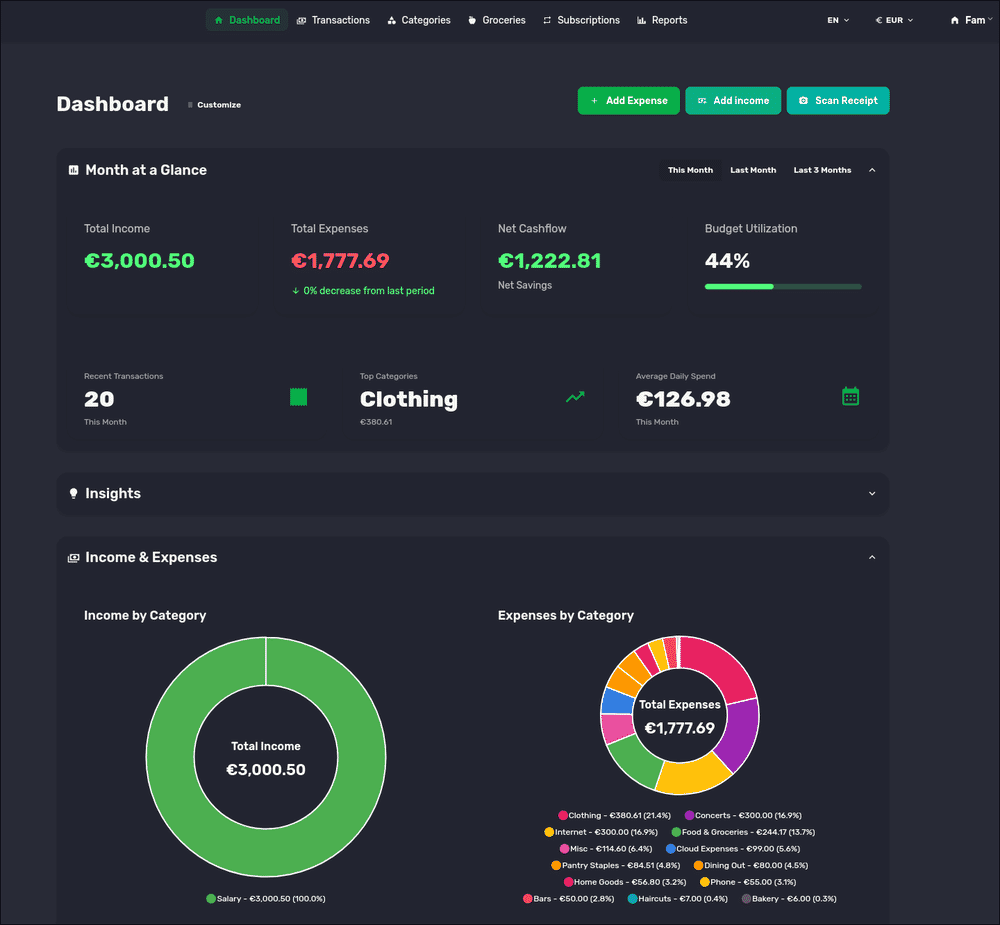
I use BudJet every day. It scans receipts, keeps the line items, and shows where the money went without making me type every purchase.
- 01Scan or import
- 02Check the AI
- 03Share the budget
- 04See the pattern
I wanted less bookkeeping
Most finance trackers work perfectly if you enjoy entering every purchase by hand. I do not. If recording a coffee takes longer than buying it, the system has already lost.
I built BudJet because I wanted a clear view of my money without turning expense tracking into a second job. The basic rule is simple: capture spending from the evidence that already exists, then make the useful part automatic.
It keeps the line items
Take a photo of a receipt and BudJet extracts the merchant, date, total, and individual items. AI suggests categories, you fix anything it got wrong, and the budget updates. The same flow works through the web app or Telegram bot, and existing data can come in through CSV instead of being typed again.
Keeping the line items matters. A supermarket receipt no longer becomes one mysterious €83 block called “Groceries.” BudJet can show what was bought, track price changes, and even look up nutrition data for food, because apparently I could not leave a receipt scanner alone.
Households
BudJet supports personal finances and shared households without mixing them into one unusable pile. Invite people, give the household its own budget and currency, then switch between your spending, one household, or everything together.
Recurring expenses and subscriptions stay visible in the timeline. Savings goals keep future purchases separate. Reports show trends and category breakdowns.
It also works across multiple currencies and seven languages. I live outside my home country and need both.
I use it every day
On 16 July 2026, I replaced a removed model in the Telegram receipt handler. A receipt photo still needed to become editable line items after the provider changed its catalogue. I then aligned the web and Telegram paths on the same model and checked structured receipt output through both providers. That is maintenance a launch screenshot cannot show.
BudJet is not a finance dashboard I built for screenshots and forgot. I use it every day. That has forced me to care about the boring parts: fast entry, editable AI results, custom categories, household permissions, encrypted financial data, recurring transactions, and reports that answer a question without making me become an accountant first.
There are more features than I first planned. The question is still whether they make tracking money less annoying. If they do not, they do not belong.
What users changed
Users found import and categorisation bugs I had not seen. Fixing those reports improved the receipt flow.
What remains imperfect
Unusual receipt layouts and vague line items still need a human check. Corrections are quick, but they are still necessary.